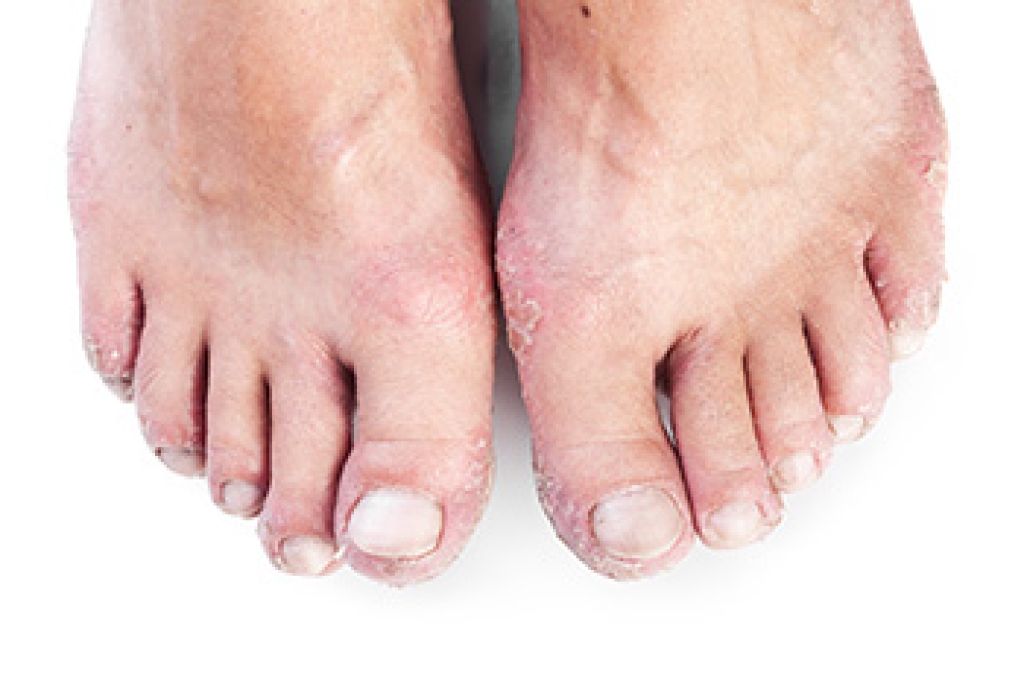
Causes and Treatment of Toenail Psoriasis

Toenail psoriasis affects how the nails grow and appear. This condition occurs when the immune system attacks healthy nail tissue by mistake, causing inflammation. It can lead to thickened nails, and color changes. Small dents may appear on the surface, and nails may lift from the skin underneath. In some cases, pain or pressure may be felt when walking. These symptoms can easily be mistaken for a fungal toenail  infection. A podiatrist can examine the nails, confirm the cause, and provide proper care to improve nail appearance and comfort. Treatment focuses on slowing the rapid nail growth and reducing inflammation. Options include medicated creams, oral medications, and small injections placed near the nail. If you have symptoms of toenail psoriasis, it is suggested that you make an appointment with a podiatrist for a diagnosis and treatment.

Toe pain can disrupt your daily activities. If you have any concerns, contact Dr. John Branwell of Kearny, New Jersey. Our doctor can provide the care you need to keep you pain-free and on your feet.

What Causes Toe Pain?

Most severe toe pain is caused due to a sports injury, trauma from dropping something heavy on the toe, or bumping into something rigid. Other problems can develop over time for various reasons.

Toe pain can be caused by one or more ailments. The most common include:

  • Trauma
  • Sports injury
  • Wearing shoes that are too tight
  • Arthritis
  • Gout
  • Corns and calluses
  • Hammertoe
  • Bunions
  • Blisters
  • Ingrown toenails
  • Sprains
  • Fractures (broken bones)
  • Dislocations

When to See a Podiatrist

  • Severe pain
  • Persistent pain that lasts more than a week
  • Signs of infection
  • Continued swelling
  • Pain that prevents walking

Diagnosis

In many cases the cause of toe pain is obvious, but in others, a podiatrist may want to use more advanced methods to determine the problem. These can range from simple visual inspections and sensation tests to X-rays and MRI scans. Prior medical history, family medical history, and any recent physical traumatic events will all be taken into consideration for a proper diagnosis.

Treatment

Treatments for toe pain and injuries vary and may include shoe inserts, padding, taping, medicines, injections, and in some cases, surgery. If you believe that you have broken a toe, please see a podiatrist as soon as possible.

If you have any questions please contact our office located in Kearny, NJ . We offer the newest diagnostic and treatment technologies for all your foot and ankle needs.

Read more about Toe Pain

Effective Foot Stretches for Heel Spurs

A heel spur is a bony growth that forms on the underside or back of the heel, often linked to strain on foot tissues. Symptoms include sharp heel pain, especially with the first steps in the morning or after rest. Risk factors include repetitive stress, poor footwear, and tight calf muscles. Gentle stretches can help relieve tension. A big toe stretch involves pulling the toe upward to stretch the arch, while a calf stretch against a wall is done by stepping one foot back and pressing the heel down. Additionally, a calf stretch on a step allows the heel to lower below the edge, and a seated calf stretch involves using a towel to pull the foot upward. Heel spurs can be painful. If this applies to you, it is suggested that you consult a podiatrist who can offer effective relief tips and discuss treatment options with you.

Why Stretching Is Important for Your Feet

Stretching the feet is a great way to prevent injuries. If you have any concerns with your feet consult with Dr. John Branwell from Kearny, New Jersey. Our doctor will assess your condition and provide you with quality foot and ankle treatment.

Stretching the Feet

Stretching the muscles in the foot is an important part in any physical activity. Feet that are tight can lead to less flexibility and make you more prone to injury. One of the most common forms of foot pain, plantar fasciitis, can be stretched out to help ease the pain. Stretching can not only ease pain from plantar fasciitis but also prevent it as well. However, it is important to see a podiatrist first to determine if stretching is right for you. Podiatrists can also recommend other ways to stretch your feet. Once you know whether stretching is right for you, here are some excellent stretches you can do.

  • Using a foam roller or any cylindrical object (a water bottle or soda can will do), roll the object under your foot back and forth. You should also exert pressure on the object. Be sure to do this to both feet for a minute. Do this exercise three times each.
  • Similar to the previous exercise, take a ball, such as a tennis ball, and roll it under your foot while seated and exert pressure on it.
  • Grab a resistance band or towel and take a seat. If you are using a towel, fold it length wise. Next put either one between the ball of your foot and heel and pull with both hands on each side towards you. Hold this for 15 seconds and then switch feet. Do this three times for each foot.
  • Finally hold your big toe while crossing one leg over the other. Pull the toe towards you and hold for 15 seconds. Once again do this three times per foot.

It is best to go easy when first stretching your foot and work your way up. If your foot starts hurting, stop exercising to ice and rest the foot. It is advised that you then see a podiatrist for help.

If you have any questions please contact our office located in Kearny, NJ . We offer the newest diagnostic and treatment technologies for all your foot and ankle needs.

Read more about How to Stretch Your Feet

Connect With Us